Monster Civilization
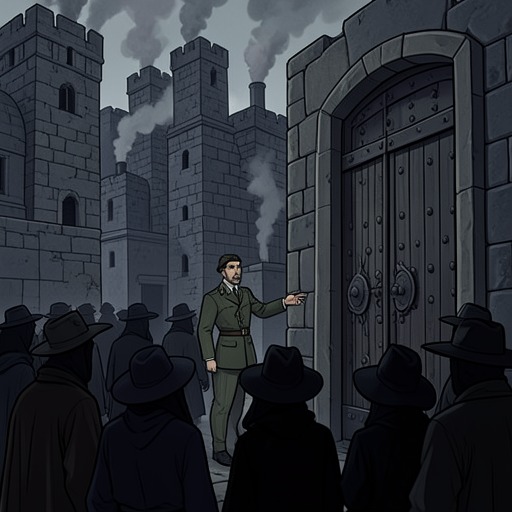
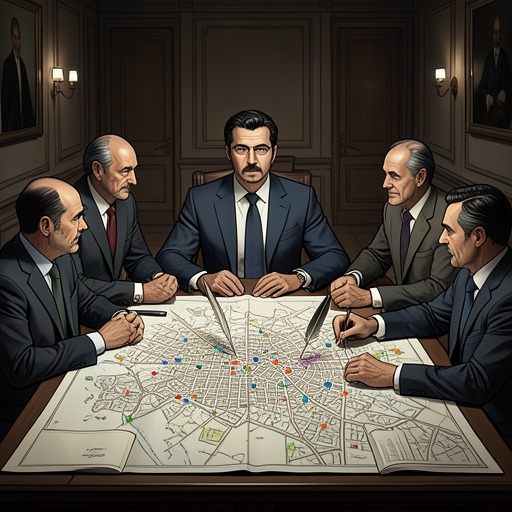
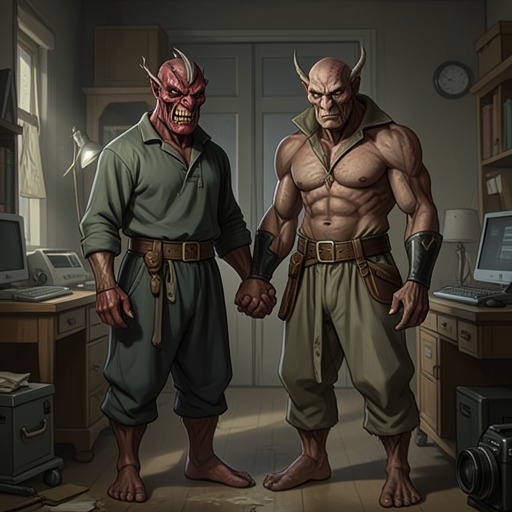
Vainqueur the DragonMonster Civilization names the book’s broadest social experiment: the attempt to make monsters into a people with a settlement, institutions, economic networks, defenses, and a recognized territory rather than leaving them as scattered enemies in a human-defined wilderness. Its decisive significance lies in the way it turns concealment and survival into political organization. Werewolves, ghouls, golems, mimics, shapeshifters, dryads, trolls, kobolds, and other creatures are not merely obstacles for adventurers; they become inhabitants, workers, soldiers, merchants, students, migrants, and potential citizens. The project remains morally unstable, because its language of coexistence repeatedly collides with hunger, coercion, and the threat of being eaten, but that tension is precisely what makes Monster Civilization more than a picturesque monster village: it is a struggle over who may count as civilized and who may control the land, labor, and rules of community.##Hidden Community and the Politics of PassingMonster Civilization first appears in the werewolf village encountered by Victor Dalton, a settlement whose inhabitants conceal their identities beneath human disguises. Croissant explains that the residents pass as human because inquisitors and adventurers frequently travel through the region and would otherwise try to exterminate them. The disguises are therefore not theatrical decoration but a survival technology, allowing a population classified as monstrous by outsiders to remain alive within a hostile political environment. The village’s social order is built around managing visibility: some residents look human enough to pass, while others are unmistakably nonhuman, and the community knows when to drop the performance once Victor Dalton is identified as a monster as well.The inhabitants reveal the diversity that human categories suppress. Victor Dalton’s Monster Insight identifies many apparently human residents as werewolves or shapeshifters such as Doppelgangers, while other villagers include a family of pallid ghouls, a squid-human hybrid, a rusty steel golem, and numerous creatures drawn from a bestiary. The village is consequently neither a human settlement with a few hidden anomalies nor a single-species enclave. It is a mixed society of humanoid-looking monsters whose common condition is exposure to persecution rather than biological uniformity. Savoureuse, a Lizardkin associated with the Nightblades, is among its residents, linking the settlement to wider monster networks and showing that Monster Civilization can absorb mobile, professionally organized figures as well as families and local inhabitants.Croissant also describes a school for mimics and other shapeshifters, where they learn to blend into human society in a safe, family-friendly environment. The school gives the community an educational function: Monster Civilization reproduces itself by teaching vulnerable creatures how to survive the dominant society without surrendering their own identity. Yet Chocolatine’s cheerful remark that the villagers kill hostile outsiders in their sleep exposes the limits of any idealized reading. The same settlement that shelters persecuted beings also prepares for lethal retaliation. Its peace is defensive, conditional, and maintained under the shadow of violence.##From Waste and Predation to Organized InstitutionsThe concept expands when Vainqueur Knightsbane orders Victor Dalton to find profitable uses for the remains and monster parts that would otherwise be left for animals. Victor is directed to open a shop selling junk, monster parts, and corpses, while also serving as chief of staff, preparing Vainqueur Knightsbane’s class progression, and training the Kobold Rangers. The instruction converts waste into an economic resource and makes administration part of the dragon’s hoard-building. Monster Civilization therefore grows through an organizational logic in which bodies, labor, skills, and discarded materials are all assigned a place within a larger system.The corpse trade demonstrates both the practical ingenuity and the ethical brutality of this system. After a corpseling approves the goods, Victor Dalton signs a long contract with the Church of Camilla as the legal living relative who surrenders corpses for necromantic transformation. The arrangement turns the dead into postmortem slave labor and leaves Victor Dalton feeling that he has done something morally dirty, while Vainqueur Knightsbane judges the transaction by the growth of his hoard. Monster Civilization does not begin from a clean opposition between civilized commerce and monstrous violence. It institutionalizes practices that human society might condemn, but it also subjects them to contracts, payment, legal status, and repeatable administration. The result is a dark form of economic modernization in which exploitation becomes more durable precisely because it is organized.The recruitment drive for the war against Furibon further reveals the society’s preference for structured mobilization over an undifferentiated mob. Vainqueur Knightsbane gathers applicants outside the orchard, mostly kobolds but also other distinctive monsters. Victor Dalton counts one hundred kobold applicants and reports that Croissant has been asked to send inhabitants with class levels above twenty, including a troll, a dryad, and a golem. Vainqueur Knightsbane claims not to discriminate among species, though his egalitarian declaration remains inseparable from his statement that every creature is equally inferior to him and eligible to become emergency food. Monster Civilization thus combines inclusive recruitment with absolute hierarchy: difference is accepted as a source of military and social capacity, but sovereignty remains concentrated in the dragon.##Territory, Migration, and the Making of MurmurinThe physical setting makes the project a frontier civilization from the outset. The Castle of Murmurin offers lava, food reserves, towers, and a secure place to store the hoard, but the surrounding region is harsh: a large volcano borders the western sea, the countryside consists of badlands and arroyos, the soil is brown, vegetation is scarce, and a vast red-sand desert begins to the south. A small village lies at the foot of the mountain, with primitive encampments near the desert’s border. Vainqueur Knightsbane remembers the region as greener two centuries earlier, while his immediate concern is whether the nearby population can supply enough cattle. The territory is therefore both ecological ruin and political opportunity, a place whose scarcity demands organization even as its fortress makes settlement possible.The history of the surrounding desert is itself a history of civilization destroyed and remade. Allison explains that the Sablaris were a dark elf empire ruling much of the southern continent, Ishfania, and Barin. Cultists of Sablar the destroyer seized control and caused a magical cataclysm intended to accelerate universal entropy, turning their empire into a red desert. Brandon Maure, the offspring of a demon lord and a dark elf, then ruled the ruins of Ishfania with summoned monsters. Monster Civilization inherits this damaged landscape rather than founding itself on untouched ground. Its territorial claims are layered over imperial collapse, religious catastrophe, demonic occupation, and the displacement of earlier populations.The gnoll tribes illustrate how the new polity incorporates people shaped by the previous regime. Their encampments south of the castle had lived under Furibon’s rule, allowed to keep their gold so long as they obeyed the lich. Many fled when Vainqueur Knightsbane made war on Furibon, while those who remained later came to Murmurin seeking work. Vainqueur Knightsbane condemns them for serving a cruel undead ruler, then forgives and accepts them into his service. Their admission is not purely charitable: the gnolls become laborers carrying the black stones used to rebuild the castle, supervised within a hierarchy that assigns most heavy work to the males. Their subsequent laziness, quarrels, and refusal to work when unobserved lead Vainqueur Knightsbane to eat twenty troublemakers before they begin behaving. The episode makes the settlement’s labor regime unmistakable. Refugees and former subjects can be absorbed, but incorporation occurs through employment, discipline, and dragon violence rather than equal citizenship.##A City, a Market, and a Program for CoexistenceChocolatine gives Monster Civilization its clearest ideological formulation. She argues that civilized species hate werewolves, monsters, and predators because monsters eat them, but also insists that monsters eat humans and their kin because they lack sufficient meat. Expulsion from cities then deprives monsters of the resources needed to sustain hunger, and the resulting hunger perpetuates further attacks and persecution. Mimics, vampires, and other creatures have adapted by infiltrating civilization, but infiltration is presented as an insufficient solution. Chocolatine instead calls for trade and imports, proposing a self-sustaining monster city that can provide food, encourage other monsters to imitate it, and eventually allow civilized species and monsters to live in harmony through exchange. Her accidental substitution of feeding in harmony for living in harmony is comic, but it also exposes the material foundation of the proposal: peace depends on reorganizing food supply, access to settlement, and economic interdependence.The city’s institutional ambition becomes visible in Nethermart, a large six-floor building in northern Murmurin constructed by bug fiends under Malfaisant’s direction. Draped in ivory and built in a rounded style described by its creators as modern and trendy, it rises as the tallest structure after Emperor Vainqueur’s statue. Its grand opening presents Monster Civilization as a commercial platform open to monsters and mortals alike. Malfaisant advertises magic items and permits customers without coins to keep a tab secured by their souls, while a thirty-percent weapons sale is offered in anticipation of the coming war with Maure. Nethermart supplies more than goods: it creates credit, debt, branding, construction, public spectacle, and a shared market through which different species can participate in the same economic system.The war against Furibon and the later conflict with Ishfania accelerate this institutionalization. The account of the War of the Hoard places Furibon’s destruction at the center of a collective historical narrative, while the siege of Murmurin shows that the settlement has become valuable enough to attack. When the Ishfanian scouts arrive, the V&V Adventurer Company is armed, the citizens erect barricades, and Allison and Rolo summon dense barriers of thorns and blackberries to delay the invading army. Training, military organization, local defense, and agricultural magic converge in the protection of the settlement. Monster Civilization is consequently not only a social ideal or commercial project; it is a fortified polity capable of collective war.##Law, Recognition, and the Contradictions of RuleAfter the defeat of Furibon, Victor Dalton asks what laws will govern Murmurin now that Vainqueur Knightsbane is the dominant dragon. Vainqueur Knightsbane first announces Vainqueur Day, a recurring celebration featuring a feast of cattle, the burning of a wooden Furibon effigy, and a statue of himself in the werewolf village. Only afterward does he address actual law, declaring that the greatest crime is separating a dragon from his hard-won hoard and establishing his first commandment as no taxes ever. The sequence captures the political character of Monster Civilization: public ritual and personal glorification come before constitutional order, yet the anti-tax rule also responds to a concrete fear of predatory authority. The new society rejects one form of extraction while preserving the ruler’s right to consume, punish, command labor, and define justice.The political settlement gains external legitimacy when the King of Gardemagne proposes a treaty after Brandon Maure’s death and the destruction of Ishfania’s army. Because the former nation has become a resource-rich demon-infested desert that other powers might contest, the King offers to recognize Vainqueur Knightsbane’s claim as Emperor of Ishfania and to treat the territory as an official adventurer state. Vainqueur Knightsbane would retain the benefits of the Adventurer Guild and rule the territory as he wished, while promising that Gardemagne and his realm would never take arms against each other and would fight together against outside threats. This treaty transforms Monster Civilization from a local concentration of monsters into a legally acknowledged frontier polity. Recognition does not erase the violence by which the territory was won, but it converts conquest into jurisdiction and makes the monster state legible within the surrounding political order.Vainqueur Knightsbane’s authority is also reinforced through memory and spectacle. After Bragging Day, the landscape is described as resembling the aftermath of a volcanic disaster: houses have been overturned and no sheep remain alive. Vainqueur Knightsbane then summons the Kobold Rangers, gnolls, mimics, and other servants to announce that the party is over and ask for Victor Dalton. The recurring feast demonstrates the reach of his personal appetite, while the organized servants and public rituals show how individual dragon behavior is being converted into collective administration. Monster Civilization therefore develops through a paradoxical mixture of institutional expansion and monarchical caprice. It offers monsters a place in history and politics, but its founding ruler continually reminds them that the social order remains an extension of his hoard.##Narrative SignificanceMonster Civilization reverses the conventional fantasy division between civilization and monstrosity. Human settlements, inquisitors, adventurers, empires, churches, and contracts are not automatically presented as morally superior; they participate in persecution, enslavement, territorial destruction, or exploitative exchange. Conversely, monsters are capable of education, migration, agriculture, commerce, military discipline, and mutual aid, even when their practices remain violent. The hidden village, the one-hundred-kobold recruitment pool, the rebuilt castle, the Nethermart, and the treaty-recognized state form a progression from survival through organization to sovereignty.The concept also binds identity to material conditions. Chocolatine’s explanation makes hunger central: the cycle of predation and expulsion persists because monsters lack reliable access to meat and urban resources. The proposed solution is not merely moral enlightenment but trade, imports, and a city able to sustain itself. In that sense, Monster Civilization is founded through logistics as much as ideology. Bridges, stone, irrigation, food reserves, corpses, magic items, classes, contracts, barricades, and defensive plants all become parts of a social infrastructure that allows nonhuman beings to persist together.Finally, the concept remains deliberately unresolved. A community that hides from exterminators, kills intruders in their sleep, sells corpses into necromantic labor, disciplines workers by eating them, and celebrates a dragon’s destructive feast cannot be reduced to a utopia. Yet it cannot be dismissed as mere barbarism either. Monster Civilization’s importance lies in that uncomfortable middle ground: it makes the monsters into historical and political subjects while showing that a society built under siege may reproduce the coercion, hierarchy, and extraction it was created to escape.